

On-Chain Analysis · 12 February 2026 · 11 min read
When Blockchain Records Do Not Prove Asset Ownership
DC-Services explains when blockchain records support ownership indicators, when they do not, and how evidential gaps are documented.

A blockchain record can prove that an address signed or received a transaction at a given block. It cannot, on its own, prove who held the key, why the action was taken, or whether the address belongs to the person the file is about. DC-Services reconstructs the record path, separates ownership indicators from assumptions, isolates the gaps that remain unresolved, and delivers a source-linked report that turns scattered chain evidence into a documented position. The sections below set out where on-chain evidence ends and where corroborating materials have to begin.
What The Chain Can And Cannot Say
The ledger is candid about what happened and silent about who did it. A transaction hash carries amount, time, destination and contract, and nothing about authorisation, identity or intent. Treating the hash as ownership evidence is a category error, and the file does not commit it.
Each on-chain event is recorded for what it supports: that the address acted, on a block, in a recorded way. Identity and ownership are tracked separately, on materials the chain cannot produce on its own.
Signed Messages As The Strongest Control Signal
A signed challenge — short message, counterparty nonce, recent timestamp, signed by the wallet key — is the most direct evidence of control. It is reproducible by the verifier and cannot be produced without the key. It supports control at the moment of signing, not before and not after.
The file records the message, the address, the signature, the verification path and the date. Older signatures are treated as historical evidence; current control requires current signing. The distinction is small and load-bearing.
Withdrawal Bridges From KYC Venues
A withdrawal from a KYC-verified exchange account into a self-hosted wallet ties an off-chain identity to an on-chain address at a specific moment. The link is strong because both ends are documented: the venue confirms the originating account, and the chain confirms the destination.
Each such bridge is recorded with the venue's withdrawal reference, the destination address, the transaction hash and the date. Subsequent on-chain activity from the destination is then attributable in a way pure cluster analysis would not support.
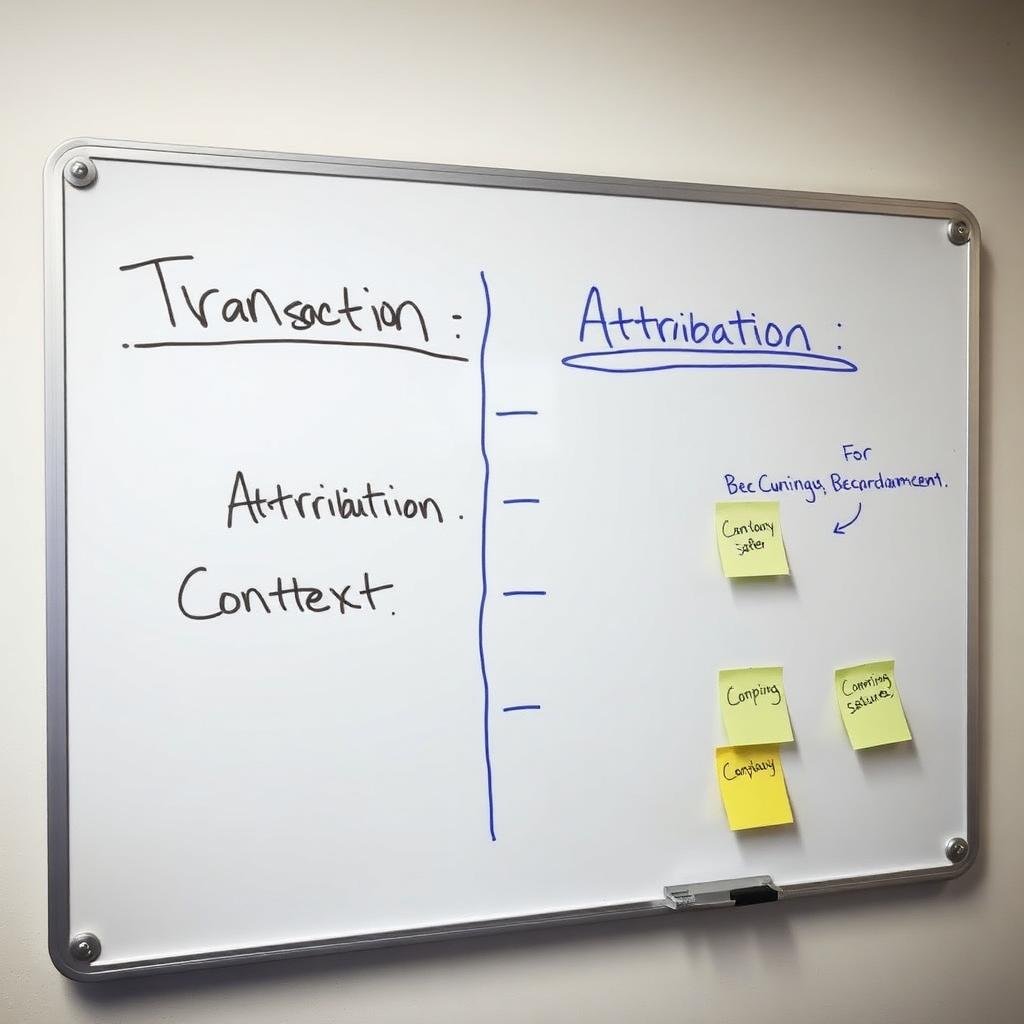
Wallet Labels And Screenshots Are Context, Not Evidence
Labels in a tracing tool, names in a personal address book, and screenshots of wallet interfaces are organisational artefacts. They reflect somebody's belief about who owns an address; they do not establish it. Mistaking them for evidence is one of the more common ways a file fails on inspection.
Labels are preserved as the metadata they are, with their source recorded. Screenshots are treated as visual context for material proved elsewhere. Nothing in the file relies on a label or a screenshot to do work that primary evidence is the only thing that can do.
Where The Chain Goes Quiet
Some questions the chain simply cannot answer: legal ownership disputes between contributors, beneficial interest held off-chain, trust arrangements, marital property, inheritance. The wallet may be controlled by one person while owned, in any meaningful sense, by several or none of them.
The file records the on-chain position and identifies the off-chain questions as such. Counterparties who need ownership confirmation are told what additional materials would actually support it. The file does not pretend that more chain analysis can substitute for legal evidence the chain never holds.
What The Deliverable Actually Says
The output is a source-linked report. Verified findings, record-backed findings, ownership indicators and unresolved matters each have their own section. Each entry links back to the underlying record, so a reviewer can verify it without re-asking us to show our working.
The report does not provide legal, tax or investment advice, and does not guarantee recovery, ownership confirmation or legal validity. It states what the evidence supports today and which questions remain open, in the order a counterparty is likely to read them.
Blockchain Evidence: Control vs Ownership
| Evidence type | Supports control? | Supports ownership? |
|---|---|---|
| Transaction hash | Indirect — action at a block | No |
| Signed message with nonce | Yes, at signing time | No |
| KYC-linked withdrawal into wallet | Yes, indirect | Partial — identity link only |
| Wallet label / screenshot | No | No |
| Off-chain legal documents | Sometimes | Yes, where applicable |
Frequently asked questions
Can a blockchain transaction prove I own the assets at an address?
No. It can support that the address acted on a block. Ownership requires corroborating materials — signed messages, KYC-linked exchange withdrawals, off-chain documents — that the chain does not hold and cannot produce.
How strong is a signed message as evidence?
Strong, for control at the moment of signing. It is reproducible by the verifier and cannot be produced without the key. It does not establish ownership and does not extend backwards or forwards in time.
Do wallet labels in a tracing tool count as evidence?
No. They are metadata reflecting somebody's belief about an address. They are preserved as context with the source recorded, but nothing in the file depends on them to do evidential work.
What happens when control and legal ownership diverge?
The file records both separately. Control is a chain-level question about the key; ownership is an off-chain question about entitlement. Where the two differ — joint contributors, trust arrangements, inheritance — the file identifies the off-chain question as a separate matter.
Does the deliverable guarantee ownership confirmation?
No. The report does not provide legal advice and does not guarantee ownership, recovery, or regulatory acceptance. It documents what the evidence supports and what remains unresolved, openly.
Blockchain evidence is precise about what happened on chain and silent about everything off it. A useful report respects that boundary and writes the missing pieces down by name.
More in On-Chain Analysis
- Address Clustering and the Ownership Question It Cannot Answer
7 Feb 2026
- Cross-Chain Tracing: Bridges, Wrapped Assets and Documentation Gaps
11 Mar 2026
- Mixer and CoinJoin Output: Recording Contamination Without Overstating It
15 Apr 2026
- Stablecoin Issuer Blacklists and Their Footprint on a Trace
19 Jun 2026
- MEV Extraction Patterns and Their Interpretation in a Trace
1 Jun 2026
- Wallet Labels and Screenshots as Attribution Evidence
19 Feb 2026
- Signed Messages as Wallet Control Evidence
26 Feb 2026
- Missing Transaction IDs in Transfer Documentation
18 Mar 2026
- Wrapped Tokens and Evidential Equivalence in Reconstructions
27 May 2026
- Address Clustering and the Limits of On-Chain Attribution
7 Oct 2026