

RegTech and Compliance · 8 July 2026 · 11 min read
Inheritance and Deceased Holder Records in Digital Asset Files
Records of a deceased holder document a position frozen at a date. DC-Services reconstructs the file to that date, identifies what remains accessible, and stops at the legal questions that belong to counsel.
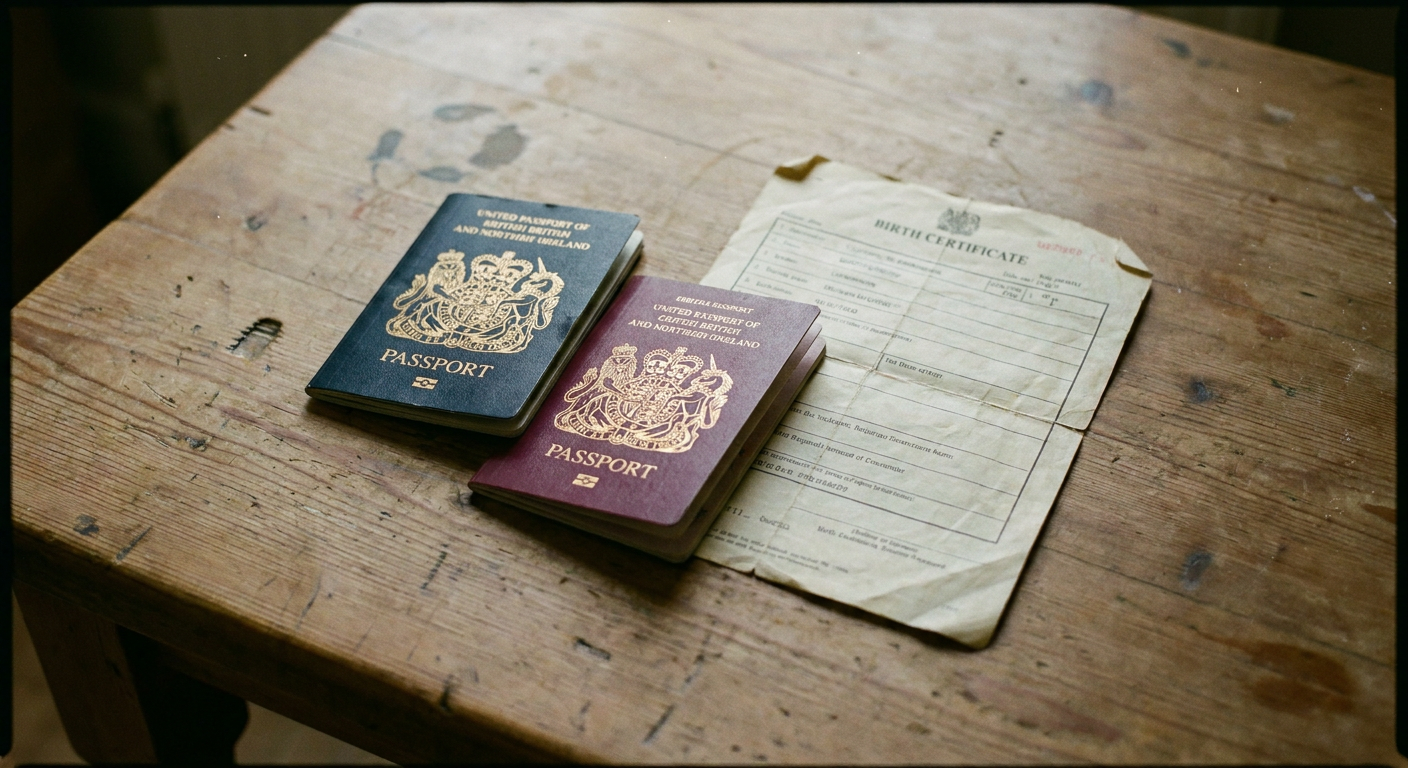
A documentation file for a deceased holder is a reconstruction to a date rather than a reconstruction to today. The records describe a position that stopped changing on the date of death, and the file's job is to document that position with the materials that can be obtained after the fact. DC-Services structures the file around the date and the materials, refers the legal questions to qualified counsel, and delivers a source-linked report for use by the estate's advisers.
Why The Reference Date Changes Everything
A reconstruction to the date of death is bounded in time in a way that an active-client reconstruction is not. Records produced after the date are documentation about the position rather than part of it; activity after the date — fees, interest, price movement — is recorded separately rather than blended into the position itself.
DC-Services records the reference date on the front page of the file and applies it to every figure. A reviewer can distinguish the position as at the date of death from any subsequent observation without having to perform that arithmetic themselves.
Record Types Accessible After The Date Of Death
Recent statements, the most recent KYC documents, correspondence with venues, copies of recovery materials, and any prior documentation file the deceased may have commissioned all enter the index with full provenance. The file does not assume any of these are complete; it records what is present.
Materials not initially in the estate's hands are pursued through the formal channels available: venue requests on production of probate documents, bank requests under the relevant statutory regimes, chain queries for self-custody addresses identifiable from the estate's records.
Classification Of Custodial And Self-Custody Holdings
Custodial holdings — venue accounts, broker accounts, custody arrangements — are documentable to the extent the custodian releases the records. The file records the request, the response, and any documents produced, classifying the position as supported by the released records.
Self-custody holdings depend on the recovery materials the deceased prepared. A wallet for which seeds, hardware devices and passphrases are recoverable is documentable end to end; a wallet for which any material is missing may be visible on chain and inaccessible in practice. The file records both states.

Verification Of Access And Continuity
Access is verified by demonstrating that the estate can perform the operations the records imply: viewing the venue account, signing from the self-custody wallet under controlled conditions, retrieving correspondence from the email account. Access that is asserted but not demonstrated is recorded as unverified.
Continuity to the date of death is verified where the records cover the period continuously. A gap between the most recent record and the date of death is recorded as a coverage limit and any position stated as at the date of death is qualified accordingly.
Unresolved Cases: Lost Keys And Frozen Accounts
A self-custody wallet for which recovery materials are missing is recorded as visible-but-inaccessible. The on-chain balance and history are documented in full; the inaccessibility is recorded as an unresolved matter with the reason named and the recovery options identified where any remain.
A venue account frozen pending probate documentation is recorded as frozen, with the venue's stated process, the documents required, and the date of the most recent venue communication. The file does not assert a position the venue has not confirmed.
Implications For Ownership, Control And Transfer
Ownership of the deceased's assets is a legal question determined by the will, the rules of intestacy, and the jurisdiction's probate law. The file records the asset position as at the date of death; the determination of who is entitled to it belongs to qualified counsel applying the relevant law.
Control of self-custody wallets passes to whoever holds the recovery materials, which may or may not be the legal owner. The file records the cryptographic position alongside the legal position and identifies any divergence rather than collapsing the two.
How DC-Services Documents The Date-Bounded Position
The summary states the position as at the date of death by asset, by venue and by wallet. Subsequent observations are recorded in a separate section with their own reference dates, so a reviewer can read the position the estate inherited without conflating it with the position the estate currently holds.
Venue correspondence is preserved in full: the request, the response, the documents produced, and any decline preserved with its stated reason. The audit trail shows what the estate did to obtain the records as well as the records themselves.
Action Strategy For The Estate's Advisers
Where the estate's advisers need additional records to complete a probate filing, a tax return or a transfer instruction, the framework identifies the specific records and the channel for obtaining them. The framework supports the advisers' work; it does not perform that work.
Where the file surfaces a question requiring legal determination — entitlement under the will, contested ownership of a wallet, jurisdiction of a venue account — the framework refers the question to qualified counsel. The file provides the documented position; the determination belongs to the people qualified to make it.
Holding Types and Their Documentation Treatment for a Deceased Holder
| Holding type | Accessibility after death | Primary records | File treatment |
|---|---|---|---|
| Venue account, active | Frozen pending probate documents | Statements to date, venue correspondence | Document position as at date of death, preserve correspondence |
| Venue account, closed before death | Records via formal request | Final statement, account closure letter | Document closing position, preserve closure record |
| Self-custody, recovery available | Accessible to recovery holder | Chain history, recovery materials log | Document position end to end, note control |
| Self-custody, recovery missing | Visible on chain, inaccessible | Chain history, no recovery record | Document visible position, record inaccessibility |
| Bank account | Frozen pending probate | Statements, correspondence, payment history | Document position as at date of death, record freeze |
Frequently asked questions
Why date the file to the date of death rather than the date of engagement?
Because the position the estate inherits is the position as at the date of death, and downstream determinations — probate, tax, entitlement — depend on that figure. A position dated to the engagement conflates the inherited position with subsequent activity, which makes the file less useful for the purpose it serves.
What happens when a self-custody wallet's recovery materials are missing?
The on-chain position is documented in full and the inaccessibility is recorded as an unresolved matter. Recovery options are identified where any remain — a partial seed, a hardware device with known PIN, professional recovery services with documented limits. The file does not assert that the position is recoverable when it is not.
How is a frozen venue account documented?
By recording the freeze, the venue's stated process for release, the documents the venue requires, the date of the most recent venue communication, and the venue's most recent statement. The file documents the position as at the date of death rather than asserting access the estate does not have.
Can the file determine who legally owns the deceased's assets?
No. Ownership is determined by the will, the rules of intestacy and the relevant probate law, applied by qualified counsel. The file documents the asset position and the records supporting it; the legal determination is a separate process the file is built to support.
Does DC-Services act as executor or fiduciary?
No. The work is documentation: reconstruct the position as at the date of death, identify the accessible and inaccessible materials, preserve the venue correspondence, and deliver a source-linked file. Acting as executor or trustee belongs to the people appointed for that purpose.
A file built for a deceased holder is useful when it is honest about the date, the materials and the limits. The estate's advisers can rely on a position that is documented to a specific date and a specific set of records; a confident position that papers over the inaccessibilities tends to fail the first probate query.
More in RegTech and Compliance
- Structuring a Source-of-Funds File Counterparties Will Actually Read
29 Jan 2026
- UK Record-Keeping Obligations: A Practical Reading
25 Feb 2026
- Scope Letters and Why Engagement Boundaries Are Written Down
27 Mar 2026
- Travel Rule Data Fields and What They Add to a Documentation File
14 May 2026
- Politically Exposed Persons Screening: What the File Records
28 Apr 2026
- Evidencing Card-Not-Present Purchases in a Source-of-Funds File
12 Jun 2026
- Reviewing a Documentation File on a Tablet or Mobile Device
2 Jul 2026
- Third-Party Signatories Inside a Documentation Engagement
12 Jul 2026
- What Record Reconstruction Can and Cannot Prove
29 Apr 2026
- The Regulatory Perimeter Around Documentation and Record Review
16 Sept 2026
- The Scope Letter as the Spine of a Documentation Engagement
4 Nov 2026