

RegTech and Compliance · 14 May 2026 · 6 min read
Travel Rule Data Fields and What They Add to a Documentation File
Travel Rule fields describe the originator and beneficiary of a transfer. Recording them accurately strengthens the file without expanding the engagement scope.

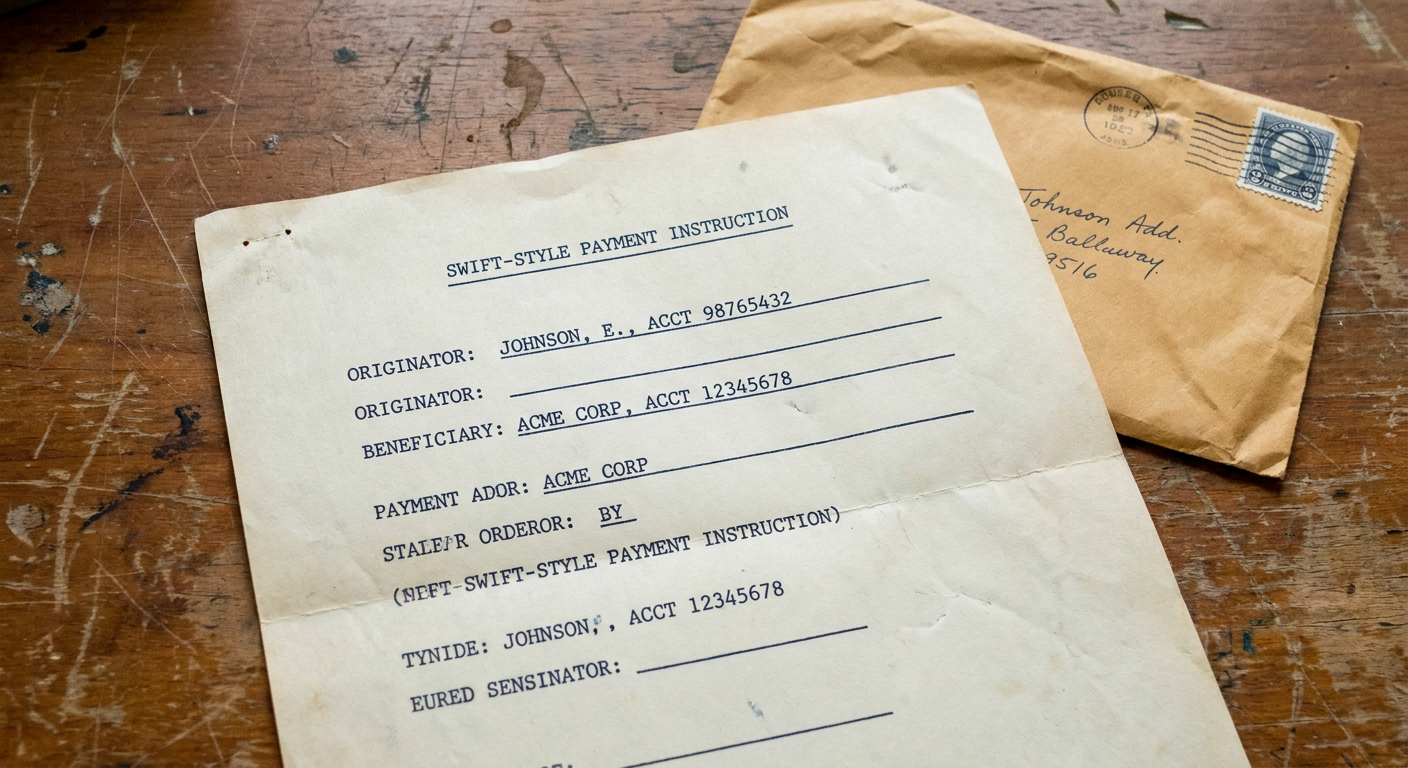
The Travel Rule requires regulated institutions to transmit a defined set of originator and beneficiary fields alongside a transfer above a stated threshold. A documentation file captures these fields where they exist, since they describe the parties and the purpose of the transfer.
Originator fields typically include the name, address or unique identifier, account or wallet reference, and where applicable a national identifier. Each field is recorded with its source: the institution that supplied it, the message format used, and the date the message was sent.
Beneficiary fields mirror the originator set. Name, address, and account or wallet reference at the receiving side are recorded against the same transfer record, so the file describes both ends of the transfer in one place rather than across separate documents to be cross-referenced.
Discrepancies between sides happen. A name spelled differently, an address that has changed, or a wallet reference that was rotated each produce a variation that the file records without silently merging. The variation is logged as a fact, with the resolution left to the reviewer.
Where the institution operated under a Travel Rule exemption, the exemption basis is recorded against the transfer. A low-value threshold, a same-customer transfer, or an internal book transfer each carry different downstream implications for the documentation file as it stands.
Sanctions screening footprints sometimes sit alongside the Travel Rule data. A screening hit that was reviewed and cleared is recorded with the date, the screener, and the resolution, so a later reviewer can see that the screening was performed rather than infer it from silence.
Travel Rule fields do not, on their own, prove the legitimacy of a transfer. They describe the parties as the institutions named them at the time. The file therefore presents the fields as one input among several, alongside source-of-funds evidence and counterparty correspondence.
Our scope is structuring records the client provides or authorises us to request. We do not act as a Travel Rule originator, do not transmit messages on the client's behalf, and do not opine on whether any specific transfer met or missed the threshold at the time of execution.
More in RegTech and Compliance
- Structuring a Source-of-Funds File Counterparties Will Actually Read
29 Jan 2026
- UK Record-Keeping Obligations: A Practical Reading
25 Feb 2026
- Scope Letters and Why Engagement Boundaries Are Written Down
27 Mar 2026
- Politically Exposed Persons Screening: What the File Records
28 Apr 2026
- Evidencing Card-Not-Present Purchases in a Source-of-Funds File
12 Jun 2026
- Reviewing a Documentation File on a Tablet or Mobile Device
2 Jul 2026
- Third-Party Signatories Inside a Documentation Engagement
12 Jul 2026
- What Record Reconstruction Can and Cannot Prove
29 Apr 2026
- Inheritance and Deceased Holder Records in Digital Asset Files
8 Jul 2026
- The Regulatory Perimeter Around Documentation and Record Review
16 Sept 2026
- The Scope Letter as the Spine of a Documentation Engagement
4 Nov 2026