

Record Integrity · 5 July 2026 · 6 min read
Process Mapping for Record Handovers Between Engagement Stages
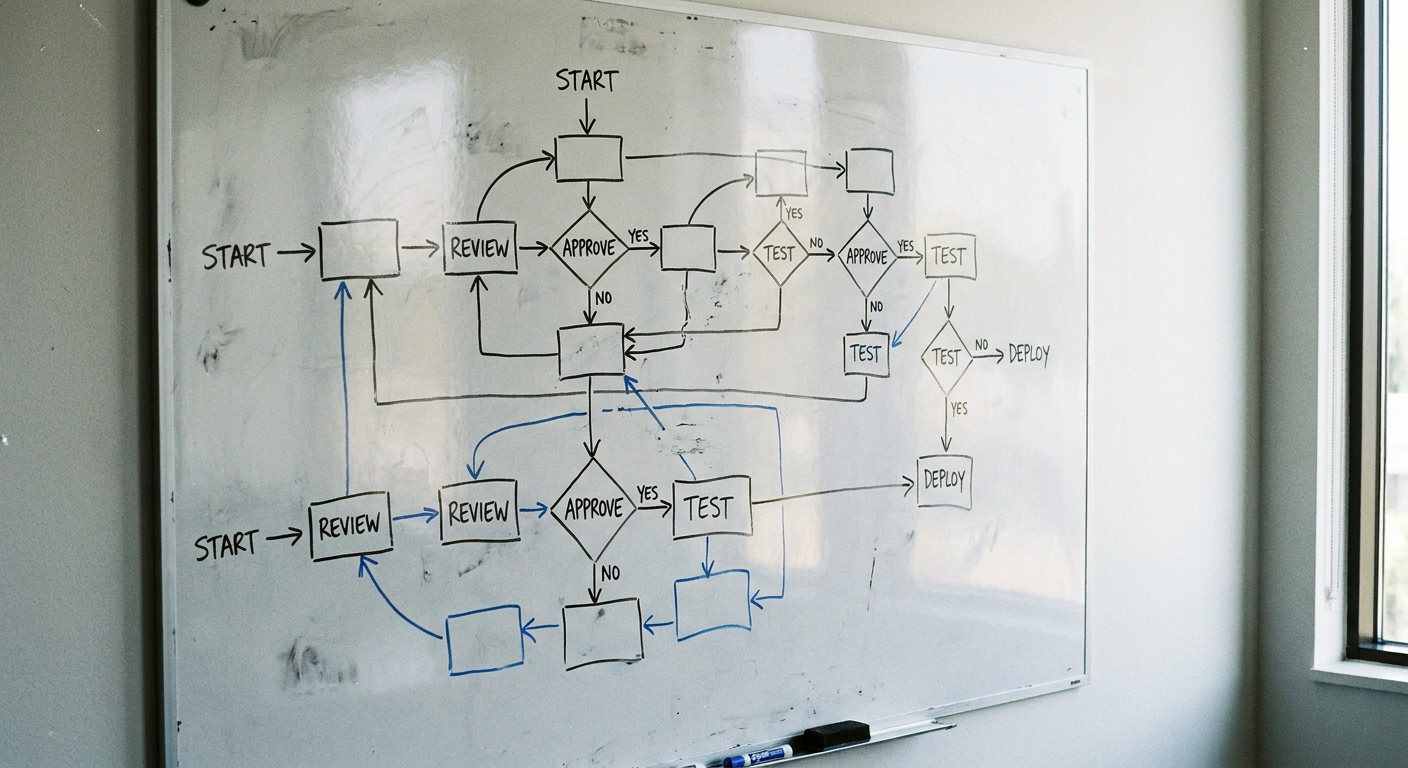
A record file moves through intake, structuring, review, and sealing. A process map names the handover points so nothing falls between stages.

A record file moves through a defined sequence of stages from intake to sealing, and the engagement maintains a process map that names every handover between stages so that responsibility for the file is always clearly held by a specific operator rather than diffused across the team in ways that allow items to fall between roles.
The intake stage receives the records the client provides, applies the initial classification, and produces an inventory. The handover to the structuring stage carries the inventory, the classification log, and any open items the intake operator could not resolve, so the structuring operator begins with a known state rather than a fresh reading of the raw records.
Structuring builds the file against the agreed template, reconciling cross-references and recording linkages. The handover to the review stage carries the structured file together with a worksheet listing every linkage decision, so the reviewer can challenge the decisions one by one rather than re-deriving them from the records themselves.
Review is performed by an operator independent of intake and structuring. The review handover is bidirectional: the reviewer can return items to structuring with specific questions, and the structuring operator answers the questions in writing rather than verbally, so the trail of revisions remains in the file rather than living in chat or recollection.
Sealing is the final stage. The handover from review to sealing carries the reviewer's signoff, the version reference, and the hash values for the file as a whole and for each primary record. Sealing creates an immutable record state from which any later amendment is recorded as a supersession rather than an overwrite.
The process map records elapsed time at each stage. A file that lingered at review or that moved unusually quickly through structuring is visible against the map, and the engagement uses the visibility to investigate workload, training, or template issues rather than treating speed alone as a measure of quality.
Where a handover fails — a missing inventory item, an unanswered review question, an unrecorded supersession — the failure is logged against the process map at the point it was detected. The log is reviewed periodically so that recurring failure points trigger process changes rather than repeated case-by-case correction.
Our scope is to operate the file's internal process. We do not extend the process to the client's own document management, do not adopt the counterparty's internal workflow, and do not represent the engagement's process map as a regulatory artefact. The deliverable is a consistently produced file at the stated quality.
More in Record Integrity
- Chain of Custody for Mixed Physical and Digital Files
9 Jan 2026
- Why Document Hashing Matters in a Sealed Archive
12 Feb 2026
- The Rejection Register and Conflicts Register as Integrity Tools
2 Apr 2026
- Timestamping, Trusted Time Sources, and the Audit Trail
28 May 2026
- Version Control for Amended Documents Inside a Sealed File
9 May 2026
- Treating Video Meeting Confirmations as Part of the Record Set
15 Jun 2026
- How Phone Conversations Are Treated Inside the Record File
18 Jun 2026
- Contradictory Records in Digital Asset Documentation Files
1 Apr 2026
- Screenshots as Supporting Context Rather Than Source Evidence
24 Jun 2026
- AI-Supported Review and the Human Verification Step
19 Aug 2026
- Evidence Strength Scoring Inside a Documentation File
2 Sept 2026
- The Rejection Register as a Visible Governance Artefact
18 Nov 2026