

Record Integrity · 28 May 2026 · 6 min read
Timestamping, Trusted Time Sources, and the Audit Trail
A timestamp is only as good as its source. A documentation file records the time authority used so a reviewer can weigh each entry against a known clock.

A timestamp is the anchor that ties an event to a moment in time. Inside a documentation file each entry carries a timestamp, and the value of that timestamp depends on the time source used. A clock that drifts, or a source that cannot be evidenced, weakens every entry it touches.
Trusted time sources fall into a small set. A network time protocol stratum, a hardware-secured time module, or a third-party timestamp authority each offer a verifiable basis for the time recorded. The source in use is documented at the start of the engagement, not implied later.
Trusted timestamping services add a cryptographic step. A hash of the document is signed with a time-authority key at a stated moment, producing a token that a reviewer can verify against the authority's public key. The token sits alongside the document in the sealed archive.
Local clock entries are still used where a trusted source is unavailable. The file records that the entry was timestamped against the local clock, names the device, and records the offset against a trusted source at the next available reconciliation point in the engagement.
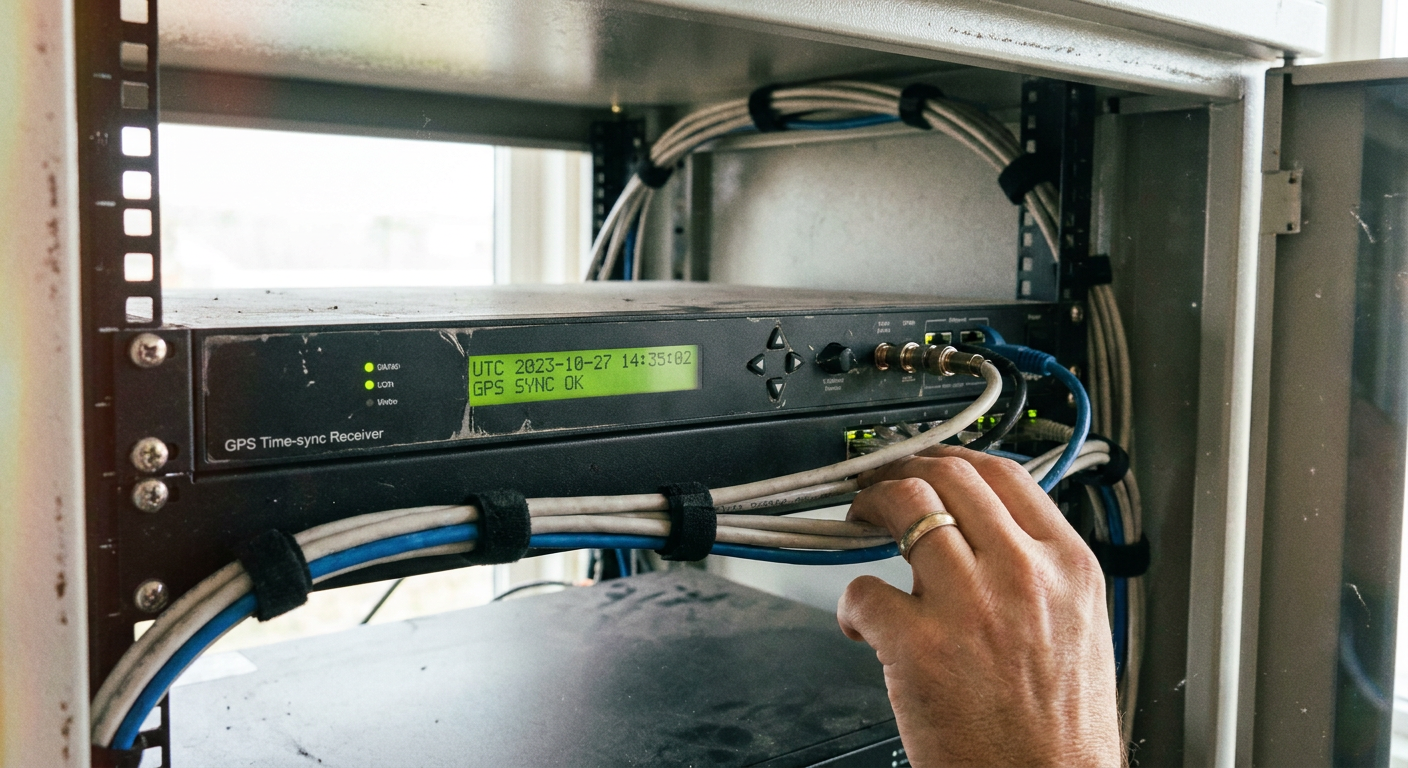
Time zone handling is its own discipline. Every timestamp is stored in UTC inside the file, with the originating time zone recorded as a separate field. A reviewer can then see both the absolute moment and the local-time presentation that the operator was working with at the time.
Daylight saving transitions are a known source of error. A file that stores only local time will produce duplicated or skipped hours twice a year. Storing UTC alongside the local presentation prevents the ambiguity without losing the operator-facing field that the audit log shows.
Backdating is prevented by structural means, not by trust. Once an entry is sealed with a trusted timestamp, any later change produces a new entry with a new timestamp rather than overwriting the original. The chain of entries is the audit trail, and the trail is append-only.
Our role is to maintain the time discipline across the records we hold. We do not adjust client timestamps, do not retro-date entries, and do not present a derived time as if it had been recorded at the original moment. The deliverable is a file with each timestamp source named.
More in Record Integrity
- Chain of Custody for Mixed Physical and Digital Files
9 Jan 2026
- Why Document Hashing Matters in a Sealed Archive
12 Feb 2026
- The Rejection Register and Conflicts Register as Integrity Tools
2 Apr 2026
- Version Control for Amended Documents Inside a Sealed File
9 May 2026
- Treating Video Meeting Confirmations as Part of the Record Set
15 Jun 2026
- How Phone Conversations Are Treated Inside the Record File
18 Jun 2026
- Process Mapping for Record Handovers Between Engagement Stages
5 Jul 2026
- Contradictory Records in Digital Asset Documentation Files
1 Apr 2026
- Screenshots as Supporting Context Rather Than Source Evidence
24 Jun 2026
- AI-Supported Review and the Human Verification Step
19 Aug 2026
- Evidence Strength Scoring Inside a Documentation File
2 Sept 2026
- The Rejection Register as a Visible Governance Artefact
18 Nov 2026