

Record Integrity · 9 May 2026 · 6 min read
Version Control for Amended Documents Inside a Sealed File
An amended document does not replace the original. The file retains both versions with a documented relationship between them.
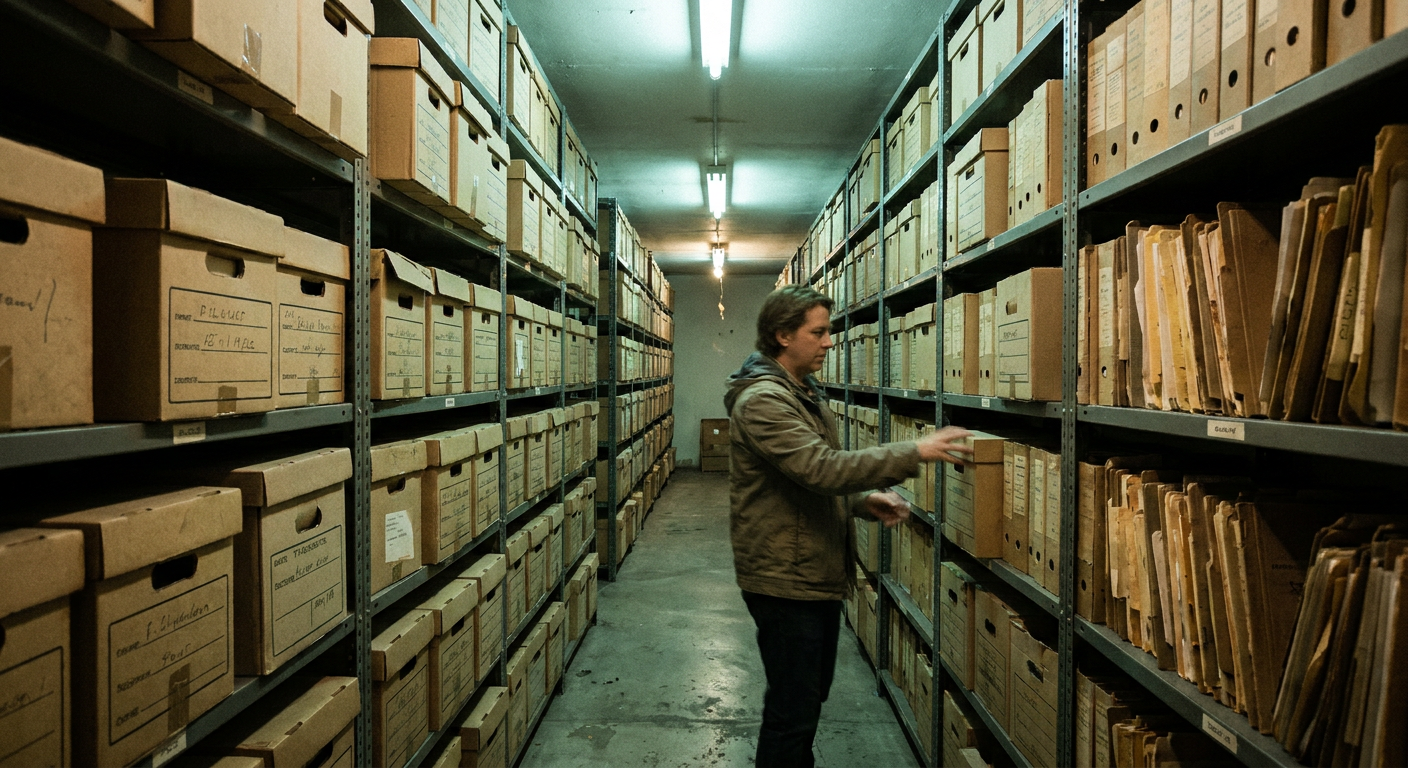
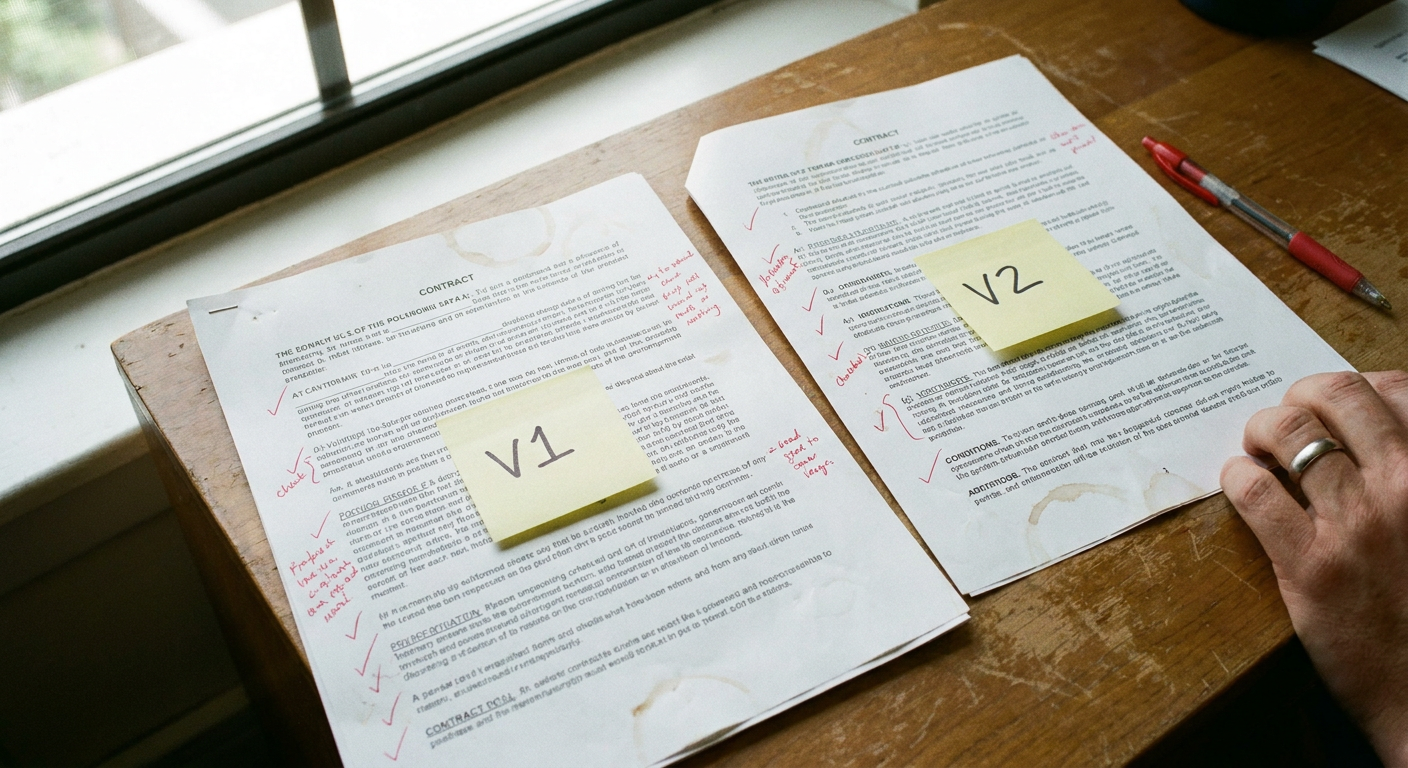
Documents inside a sealed file are sometimes amended after sealing. A corrected statement, a re-issued reference letter, or a revised contract enters the file as a new version. The original version is not overwritten. Both versions remain, with a recorded relationship between them.
The relationship is recorded as a supersession entry. The new version names the version it supersedes, the date of supersession, and the reason given by the issuing institution. A reviewer can therefore see which version was authoritative at any past date without inferring the change.
Hashes are computed for each version separately. The hash of the superseded version remains valid as a fingerprint of that version, and the new hash fingerprints the replacement. The two are stored side by side so that integrity checks against either version remain meaningful.
Reasons for amendment vary. A typographical correction by the issuer, a recalculated interest figure, or a re-issued document on the institution's headed paper each carry different weight, and the file records the reason category alongside the supersession entry for later review.
Self-corrections by the client are recorded as a distinct category. Where the client provides an updated narrative or a revised cover note that accompanies the institution's documents, the self-correction is filed separately and clearly labelled rather than merged with institutional records.
Audit-log entries for amendments name the operator who filed the new version and the operator who approved the supersession. Two-stage approval applies to amendments as it does to original filings, so a single operator cannot insert a replacement document without independent review.
Where the issuing institution declines to issue an amended document, the file records the request, the response, and the gap. A reviewer can then see that the absence of an amendment is the institution's position rather than the engagement's oversight or the client's choice not to ask.
Our scope is to maintain the version record across the documents the client provides. We do not request amendments from institutions without written authority, do not negotiate the wording of a re-issued document, and do not represent the client in any dispute over an amendment refusal.
More in Record Integrity
- Chain of Custody for Mixed Physical and Digital Files
9 Jan 2026
- Why Document Hashing Matters in a Sealed Archive
12 Feb 2026
- The Rejection Register and Conflicts Register as Integrity Tools
2 Apr 2026
- Timestamping, Trusted Time Sources, and the Audit Trail
28 May 2026
- Treating Video Meeting Confirmations as Part of the Record Set
15 Jun 2026
- How Phone Conversations Are Treated Inside the Record File
18 Jun 2026
- Process Mapping for Record Handovers Between Engagement Stages
5 Jul 2026
- Contradictory Records in Digital Asset Documentation Files
1 Apr 2026
- Screenshots as Supporting Context Rather Than Source Evidence
24 Jun 2026
- AI-Supported Review and the Human Verification Step
19 Aug 2026
- Evidence Strength Scoring Inside a Documentation File
2 Sept 2026
- The Rejection Register as a Visible Governance Artefact
18 Nov 2026